
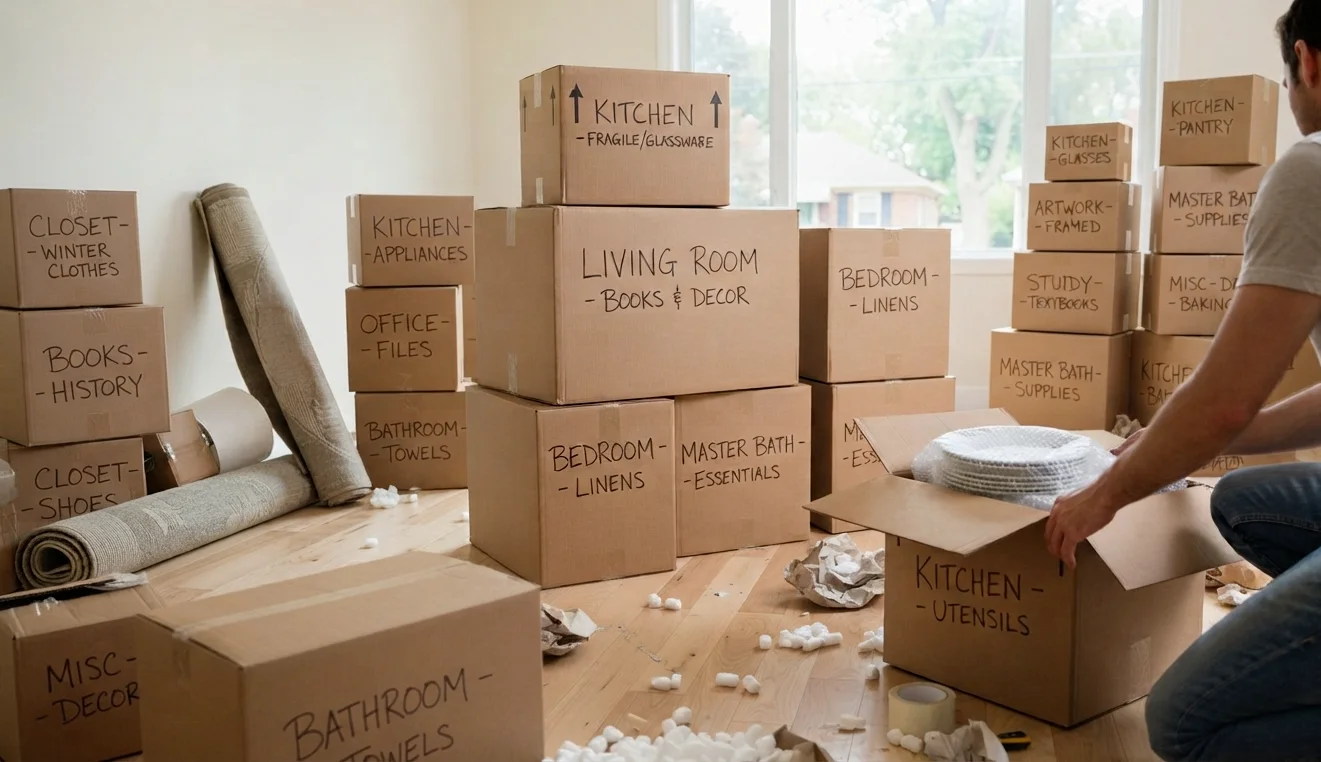
How to Unpack and Organize After Moving: Unpacking 101
A few days after moving into a new home of my customers, I saw more than forty unmarked boxes placed around the rooms with a coffee machine in the middle of them somewhere. The family was tired just looking at it all. In just twenty minutes of planning, by evening, they already had a functioning kitchen and beds prepared, not just boxes.
So, the brief summary of how to unpack and organize after moving would be: first make a box for the essentials, unpack only one room at a time following certain order, break boxes down right away and set realistic goals for each day instead of doing everything at once. Unpacking looks really tough mostly because people do not separate the task but try to do everything at once.
If you have just moved and now you are facing a stack of boxes, then here is what you should do.
Table Of Contents[hide]
Why Having an Unpacking Plan Matters
Unpacking without a strategy is likely to result in random box opening, distraction, and boxes opened partially in every room. The strategy ensures that you have a clearly defined starting and end point of the unpacking process each day, making it manageable rather than endless.
One thing I have learned by helping many families to move over the years is that those households that will unpack fast on day one will have a strategy. Those families that wait until “they figure it out later” will end up with boxes still standing one month later.
Finally, a strategy prevents you from the potential physical harm that can be done when moving. Trying to unpack all at once within a couple of days results in overexertion, and according to the Consumer Product Safety Commission, inappropriate and repetitive lifting are one of the main causes of moving-related injury.
Supplies You'll Need
You don’t need a fancy organization system to unpack well. Most of what helps is simple and affordable.
- Box cutter
- Permanent marker
- Trash bags
- Cleaning supplies
- Paper towels
- Microfiber cloths
- Storage bins
- Drawer organizers
- Zip-top bags
- Step stool
- Label maker, optional
- Basic toolkit
- Phone charger
- Notebook
According to my personal experience, a notebook is the most underestimated thing on this list. It is much more efficient to make yourself a checklist for all rooms you have to move out of as you progress.
Things to Do Before Unpacking
Before you even open your first box, some small but useful tasks will facilitate the whole process.
- First, clean your house. It is easier to clean empty cabinets, shelves, and countertops rather than those that are already stuffed with your possessions. At the same time, this is the exact time when cleaning should be done according to cleaning professionals. American Cleaning Institute claims that it is necessary to clean surfaces before putting items there in order to avoid dust and residues on them.
- Secondly, check utilities. You definitely want to know whether water, electricity, and gas work properly while you start moving out.
- Thirdly, look for damages. Walk around the apartment and write down all damages it might have because it might be difficult to see them in case you move furniture around.
- Finally, find all your documents. Place all your lease papers, moving inventory, ID, etc. in one place rather than somewhere in a box.
- Find your important papers. Have your lease agreement, closing papers, IDs, and moving inventory all together in one place, rather than hidden somewhere in a box. Have your internet working. Set up or schedule your internet to be set up sooner than you think you might need it.
- Build the beds first. Having beds put together on the very first day means that everyone can have a good place to sleep while everything else is being unpacked in the days that follow.
- Decide your room priorities. Figure out which rooms are most important for your daily life and get these sorted out first typically the bedroom, bathroom, and kitchen.
- Make an unpacking plan. This is just a quick list of rooms and chores that need doing, which helps you keep going rather than jumping back and forth between incomplete spaces.
Step-by-Step Guide to Unpacking and Organizing
- Step 1: Unpack the Essentials Box First
If you packed a box of things that are needed right away, such as toiletries, chargers, tools, and a few days worth of clothes, open this one first regardless of which room you are in.
A common problem is putting together the essentials pack and forgetting where it is when it comes to loading the truck or garage. Make sure it travels with you at all times, unlike other things you may put inside.
- Step 2: Set Up the Bedroom Next
Assemble the bed, set up the beddings, and unpack just sufficient amount of clothes to last you the first few days. The importance of having a comfortable place to sleep cannot be compared to anything else you might unpack before that.
From personal experience, the people who unpack faster than others manage to get their bedrooms ready for living in the very first day, even though the rest of the unpacking might be finished later. An exhausted and not-rested person will unpack significantly slower than the rested one.
- Step 3: Tackle the Bathroom
Unpack your toiletries, towels, and a shower curtain to make the bathroom ready to use instantly. It is normally an easy room to unpack since there are not too many boxes required for the process.
The trick for the bathroom would be getting some drawer organizers and using them right away, instead of unpacking things into drawers haphazardly and organizing them afterwards.
- Step 4: Move to the Kitchen
Begin with common household objects such as dishes, silverware, cups, and common cookware, leaving specialized appliances and objects for last. Dust off the cabinets and drawers while doing so, unless you have already cleaned out this area.
Since the kitchen is the most laborious room, it makes sense to work on it in stages rather than attempting to finish it all at once. On day one, unpack the dishes and utensils you use frequently, with the rest of the organizing to be done in subsequent days.
- Step 5: Set Up the Living Room
Start with placing furniture where you want it, and only after that begin unpacking any decorations, electronics, or media items. It is important to measure where each piece of furniture is going to be positioned before actually starting to move things around.
One of the most common mistakes people make in this room is unpacking the decorations before placing furniture into position, and that means having to move the objects back again.
- Step 6: Unpack the Home Office
Arrange your desk, chair, and anything else you need to use to do work. If you’re a busy professional, you’ll want to get back on track as quickly as possible. Cable management tends to be one of the most time-consuming elements of this room, so go ahead and label everything as you unpack if you didn’t while you packed.
It may be okay for this room to wait a day or two depending on how flexible you are, but if you work from home, it’s worth prioritizing because of your own peace of mind and earning potential.
- Step 7: Handle the Laundry Room
Unpack detergents, dryer sheets, and laundry sorting containers. Make sure that your washer and dryer are properly installed and operational. This space tends to go fairly fast once the machines are installed.
- Step 8: Finish With the Garage and Storage Areas
The garage or attic tend to be best left for last, as these spaces will contain stuff that you won’t immediately need. Don’t move things straight from the truck to the garage. Instead, sort what you’re unpacking right then and there.
It’s too easy to put unopened boxes in the garage “to sort later” and then not open them until much later, possibly months down the line.
Suggested Unpacking Order
For an easy order to work with from one room to another, try this one out:
- Bedrooms
- Bathrooms
- Kitchen
- Living room
- Home office
- Laundry room
- Garage
- Storage areas
This order is arranged to focus on daily comfort first, followed by the rest of the rooms that may not be used so frequently and therefore can be put in order last.
Should You Wrap Every Piece Individually?
Being organized through the unpacking process will make all the difference in how quickly your new house gets its footing. It will either become settled within a couple of days or take months before the settling is done.
- Take apart boxes as soon as you unpack them. Remove the empties from the room immediately after unpacking instead of allowing them to accumulate around you. The presence of empty boxes will make it difficult to know what still needs to be unpacked.
- Sort things by category. Sort the items into categories when unpacking them rather than putting them randomly in places to make it easy to find them whenever necessary.
- Use Labels. Make sure you maintain the labeling system you started in the packing process when organizing the shelves and drawers in your new home.
- Avoid clutter piles. Store items in their proper place immediately rather than making a "figure out how to deal with this later" pile, which is likely to get bigger rather than smaller.
- Create donation boxes. Have a set place where you can store any unwanted items as you unpack.
- Unpack one room at a time. Do not be tempted to open up boxes from several rooms simultaneously. Completing one room will make you feel better about yourself and also prevent the entire home from appearing to be in disarray.
- Set yourself an unpacking objective every day. Set reasonable goals; for example, completing one room instead of trying to complete the whole process in one day.
Common Mistakes to Avoid
- Unpacking the entire house in a day
- Forgetting to label and becoming confused about what is contained in each box
- Neglecting to unpack your essentials box until after everything else
- Hoarding unnecessary clutter rather than placing it in a donation box
- Failure to measure furniture placement before organizing the room
- Keeping boxes closed and unopened in the garage or another unused room for weeks
- Unpacking several rooms at once instead of completing one at a time
Based on years of assisting customers moving to new places, those are the same tendencies I observe all the time when people move slowly. They are easy to prevent if you only know how.
How Long Does It Take to Unpack After Moving?
The time needed for unpacking depends on the size of the home and assistance you receive. Here are the estimated times based on my experience from hundreds of moves.
- Studio apartment: one to two days until you get a fully operational place.
- One or two-bedroom apartment: three to five days to completely unpack and arrange all items.
- Small house: one to two weeks, especially if you have a garage or other storage space.
- Family house: two to four weeks, especially if you have several bedrooms and other storage spaces to sort out.
The factors that influence the duration of the process include the number of helpers, whether you work during the move or not and the initial organization of your boxes. Well-labeled move will be finished quicker than the one with unlabeled and mixed boxes.
When Professional Movers Can Help?
The other reason why families opt to hire movers is placing furniture. This usually happens with bigger items which require to be lifted and carried upstairs or into confined areas. In addition, packing and unpacking services may take away much precious time from busy professionals or bigger families.
In case of senior moving, hiring professional services may be a good choice as well due to the danger of injury during heavy lifting operations. Moreover, some specialty items such as pianos, safes or fragile antique items should be professionally packed and moved.
Labor only moving are available from companies such as Power Movers. Therefore, using their services may spare homeowners from the physical labor, while organizing remains a personal matter. The situation when people have little time or do not want to injure themselves moving a heavy item to the second floor may become the right moment for hiring more workers.
Conclusion
The process of unpacking and organizing after relocation is as follows: begin by focusing on the basics, follow a room-by-room system in a prioritized sequence, maintain consistency in terms of labels and decluttering, and be realistic about timing yourself. By following the aforementioned process, you will feel right at home in your new residence in just a few days.
Whether you unpack yourself at your own pace or get assistance throughout the process, the idea behind all this remains the same to move into your new house without exhausting yourself. Which room do you plan to start with?

Article written by
Gary founded Power Movers in 2007 after watching too many moving companies damage or steal from customers with no consequences. The company runs on one rule: every crew member gets background-checked, trained, and held to the same standard Gary was held to as a police officer. Over 9 years in, Power Movers handles local and long-distance moves, specialty items, and corporate relocations for Houston businesses including Tesla and Airgas.