
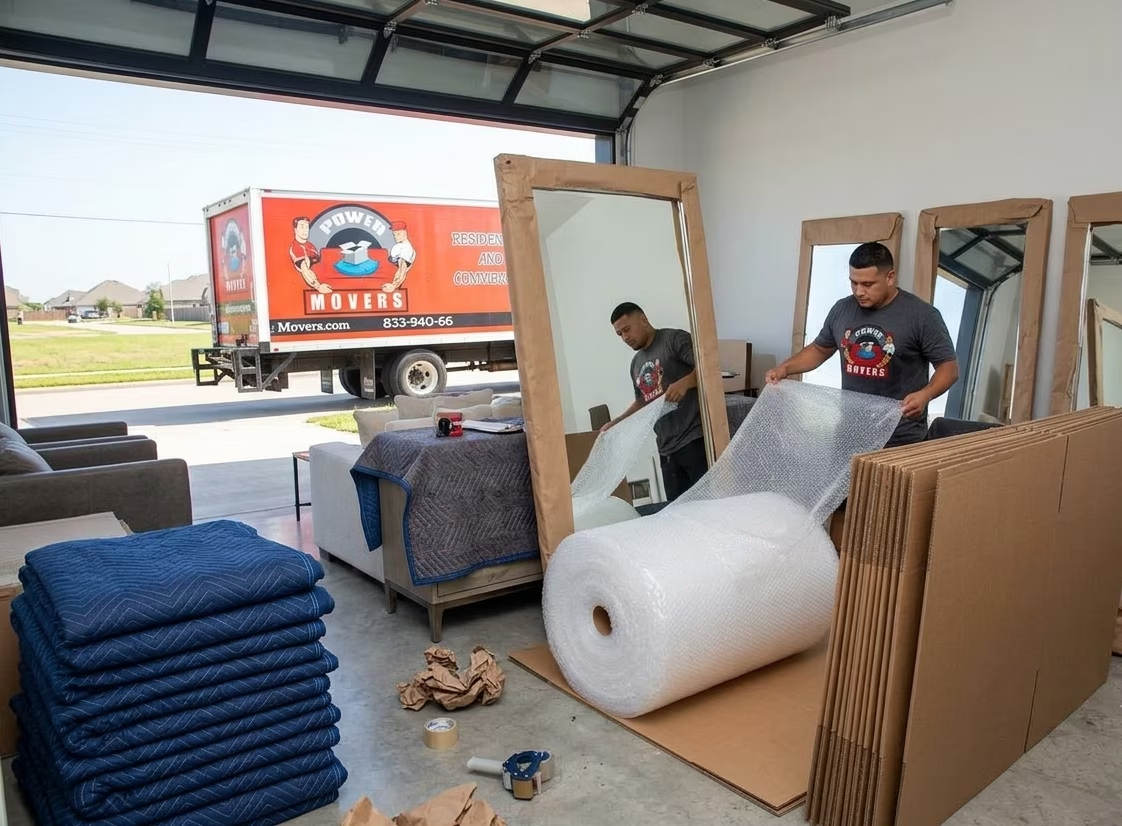
How to Move Large Mirrors Safely: Step-by-step Guide
Few things are harder to move than a large mirror. It’s heavy, it’s awkward, and a single knock can crack it. You can’t carry it flat, and you can’t lean it against a wall like a dresser. One bad grip or one sharp corner can turn a floor-length mirror into a pile of shards.
A little planning keeps the risk manageable. This guide walks through the whole job: taking the mirror off the wall, wrapping it, boxing it, carrying it, loading it, and hanging it again.
The short version: Line up a helper or two. Wear gloves and eye protection. Clear the path, then wrap the mirror in paper and bubble wrap and stiffen it with cardboard. Put it in a snug mirror box or a blanket wrap. Carry it upright on its edge, and load it on its edge too, strapped in, with nothing leaning on it.
Table Of Contents[hide]
Why large mirrors are so hard to move?
- Start with the weight. Glass runs about 13 pounds per square foot for every inch of thickness, so a typical quarter-inch mirror is around 3.3 pounds per square foot. A 4-by-6-foot mirror has about 24 square feet of glass. That’s roughly 78 pounds before you add the frame.
- Glass doesn’t hold up its own weight well when it’s flat. Professionals carry it upright on its edge, the way you’d carry a sheet of plywood. Laid flat or tilted, the surface takes stress it isn’t built for.
- Edges and corners are the weak spots, and a small knock there is how most mirrors crack.
- Then there’s the backing. The silver coating on the back is thin, and moisture can damage it, especially along the edges.
Before you start: assess the mirror and the route
Take ten minutes for this. It saves the most trouble later.
- Measure the mirror: height, width, and depth, frame included. Then estimate its weight.
- Check how it’s mounted. It might hang on wire or hooks, screw into studs, sit on a French cleat, bolt to a dresser or vanity, or be glued to the wall.
- Look it over for chips, cracks, loose frame joints, and dark spots at the edges. Then photograph it from several angles so you have a record of its condition before the move.
- Measure the path too: doorways, hallways, stair turns, elevator interiors, and the truck or vehicle. A tall mirror that stands fine in the room may not clear a stair landing or fit in an elevator.
Safety gear and helpers: Large glass is a team job. Glass-industry safety guidelines say large panels should be handled by at least two people. One glass-handling guide says to bring in trained help or lifting equipment whenever the people on hand can’t fully control the panel. Don’t try a solo lift just because you have a dolly or suction cups.
Wear:
- Cut-resistant or rubber-palm work gloves, for grip and sharp edges
- Safety glasses
- Closed-toe shoes or safety boots, in case the mirror is dropped
- Long sleeves and pants
Only lift what you can control. If the mirror is about 4 feet or longer in any direction, or around 50 pounds or more, seriously consider hiring professionals.
What you'll need
- A mirror box (telescoping or adjustable) sized to the mirror, or heavy corrugated cardboard sheets
- Plain packing paper
- Bubble wrap, preferably large-cell
- Corner protectors, cardboard or foam
- Moving blankets and stretch wrap
- Painter’s tape (low-tack)
- Packing tape and a marker
- Foam board or plywood for very large or valuable mirrors (optional)
- A furniture dolly or glass cart, ratchet straps, and a drop cloth
- Wood blocks or padding to set the mirror on
Retail mirror boxes generally top out around 4 to 5 feet on the longest side. Telescoping versions extend a bit past that, so check the box’s stated maximum before you buy. Pick a snug fit, because a box that’s too large lets the mirror slide around. For truly oversized mirrors, ask a professional about a custom crate.
Steps to move large mirrors safely?
Step 1. Clear and protect the path
Pick up rugs, mats, and anything else you could trip on. Open every door all the way and prop it. Pad sharp corners along the route. Decide ahead of time where you’ll set the mirror down if someone’s grip slips, and put a blanket or padding there. Never set glass directly on a hard floor.
Step 2. Take the mirror down
Before you release anything, have a second person take the mirror’s weight.
- On wire or hooks: One of you holds the bottom edge while the other lifts the mirror off the hooks. Lower it onto a padded surface, standing on its edge.
- Screwed or cleated to the wall: Your helper holds the mirror while you take out the fasteners.
- Attached to a dresser or vanity: Unscrew the mounting hardware, bag the screws, and tape the bag to the back of the mirror.
- Glued to the wall: This isn’t a DIY job. Builder-grade mirrors are held with a strong adhesive, and even home-improvement guides warn there’s always a chance the glass breaks while you work it loose. It takes at least two people, plus tape over the glass, gloves, and goggles. A glazier is the better choice. In many homes a glued bathroom mirror stays with the property anyway, so check your lease or sale agreement.
Step 3. Clean and inspect
Wipe the glass with a soft cloth until it’s dry and free of grit, so nothing grinds into the surface in transit. Check again for cracks and edge damage, and photograph any you find.
Step 4. Decide whether to tape an X
Some movers run painter’s tape across the glass in a big X, corner to corner, so the pieces hold together if the mirror cracks. It won’t prevent a break, and you can skip it. If you do use it, choose low-tack painter’s tape, put it on clean, bare glass, and pull it off soon after the move.
Adhesive can leave residue, especially in a hot truck or storage unit. Skip the tape on antique mirrors, on silvering or paint that’s flaking, and on gilded or delicate frames. Either way, keep packing tape off the glass itself.
Step 5. Wrap in layers
- Cover the whole mirror, face and back, with plain packing paper.
- Put bubble wrap over the paper and fold it over the edges.
- Fit corner protectors on all four corners.
- Tape the wrap to itself, not to the glass.
- With framed or ornate mirrors, pad the frame corners and stuff any gaps in the frame with paper so nothing can shift.
Step 6. Add rigidity for very large mirrors
For a very large or valuable mirror, sandwich it between two sheets of heavy cardboard, foam board, or plywood so it can’t flex. Tape the panels together around the edges.
Mirror box: Assemble the bottom half and add a few inches of crumpled paper as a cushion. Slide the wrapped mirror in on its edge, slide on the top half, fill any gaps with paper, and seal the seams with heavy tape. Tip the box gently. The mirror shouldn’t move.
Blankets: Wrap the cardboard-protected mirror in moving blankets and hold them in place with stretch wrap over the top. This works for local moves where the mirror can stay upright in the truck.
Label every side: FRAGILE, LARGE MIRROR, THIS SIDE UP, DO NOT LAY FLAT. Add arrows pointing up.
Step 7. Carry it correctly
- Carry the mirror upright on its edge, with the bottom edge taking the weight.
- Use two people, one at each end, and add more for long or heavy mirrors.
- Walk slowly and talk constantly. If anyone’s grip slips, stop and set it down.
- Use a furniture dolly or glass cart where floors are smooth.
- Don’t let the mirror touch bare ground. Rest it on padding, wood blocks, or blankets.
- On stairs, keep the mirror vertical and use extra helpers.
Professionals handling bare glass panels use suction cups made for glass as standard equipment. They don’t replace a second person, and they’re no help with a mirror that’s already boxed.
Step 8. Load and secure it
- Stand the mirror on its edge against a solid wall of the truck or vehicle, padded on both sides. Between mattresses or other soft items is ideal.
- Strap it down with ratchet straps or load locks so it can’t tip, slide, or flex.
- Never lay it flat, and never stack anything on top of or against the mirror.
- Load it last if you can, so it comes off first.
- If you’re moving several mirrors, stand them on edge with padding between each one.
Step 9. Unload, unpack, and rehang
Unload the mirror first and keep it upright. Unpack it on a padded surface and cut the packing tape carefully so the blade never touches the glass. Check the corners and edges, then the surface.
To hang it, find studs if you can and use hardware rated well above the mirror’s weight. A French cleat spreads the load of a heavy frame. One person holds the mirror while the other checks that it’s level and secure. Don’t let go before that.
Special cases
Floor-length and leaner mirrors. The thin frames flex, so a cardboard or foam sandwich helps a lot. They’re long too, so check the route for ceiling height and tight turns.
Antique and ornate mirrors. Old silvering and delicate frames damage easily. Skip tape on both the frame and the glass, add extra padding, and consider a professional crate. Document the mirror’s condition and value before the move.
Mirrored closet doors and large panels. Installation varies, so check before you start. Most need a helper to lift them out of their tracks. Pack them like any other large mirror.
Bathroom and vanity mirrors. These are the ones most likely to be glued. Leave them to a professional.
Moving large mirrors in Houston
- Humidity. Moisture is the main cause of the black spots that appear along mirror edges, where the silver backing corrodes. Houston is humid, so don’t leave mirrors in damp garages or in storage without climate control. Glass-handling guidelines say to store glass on edge, in dry conditions. Humid air also softens cardboard, so a mirror box that sits too long can lose strength.
- Heat. Tape adhesive can get gummy in a hot truck. Load early in the day, and don’t leave a wrapped mirror sitting in a parked vehicle.
- Apartments and high-rises. Reserve the elevator and measure the inside before moving day. A tall mirror may only fit at an angle. Ask the building about moving hours and any padding requirements.
- Rain. Wet floors and soggy cardboard are a bad mix with glass. Plan a covered path or reschedule.
Should you hire professional movers?
Consider it if the mirror is about 4 feet or longer, around 50 pounds or heavier, antique, valuable, glued to a wall, on a high floor, or headed a long way. Crews bring the dollies, padding, and straps, and they’ve done this many times.
Know how coverage works. For interstate moves, federal rules say the basic Released Value option limits a mover’s liability to 60 cents per pound per article. At that rate, a 60-pound mirror is worth $36 in a claim, however much it cost. Federal guidance also notes that if you pack your own boxes, it can be harder to establish a claim for damage. Ask your mover to lay out their coverage options in writing.
Moving within Texas? Use a licensed mover. A licensed Texas mover has an “Active” TxDMV certificate number, and you can check it in the department’s Truck Stop database before you hire. Talk through the mover’s liability before you sign the contract, since you and the mover agree on it in advance. If something is damaged, note it on every copy of the moving contract, then file a written claim so the mover receives it within 90 days of delivery. Photos of the mirror from before the move make any claim easier.
Common mistakes to avoid
- Laying the mirror flat
- Carrying it alone
- Resting it on a hard floor or leaning it against a wall unpadded
- Using packing tape directly on the glass
- A box that’s too big for the mirror
- Letting anything lean against the mirror in the truck
- Skipping the path measurements
- Hanging it with anchors that aren’t rated for its weight
Sources
- Federal Motor Carrier Safety Administration, “Liability and protection when you move”
- Texas Department of Motor Vehicles, “Don’t Make a Move” consumer guide
- Texas Department of Motor Vehicles, moving checklist
- Professional Remodeler / JLC, “Tips for moving glass”
- Site safety guidelines for glass handling and storage (Haworth)
- GT Glass Tools, “How to safely transport large glass sheets”
- State Compensation Insurance Fund, “A Window to Glazier Safety”
- Hunker, “How to Remove a Mirror Glued on the Wall”
- Mental Floss, “Why Do Mirrors Have Black Spots?”
- GlassOnWeb discussion of glass weight per square foot

Article written by
Gary founded Power Movers in 2007 after watching too many moving companies damage or steal from customers with no consequences. The company runs on one rule: every crew member gets background-checked, trained, and held to the same standard Gary was held to as a police officer. Over 9 years in, Power Movers handles local and long-distance moves, specialty items, and corporate relocations for Houston businesses including Tesla and Airgas.