
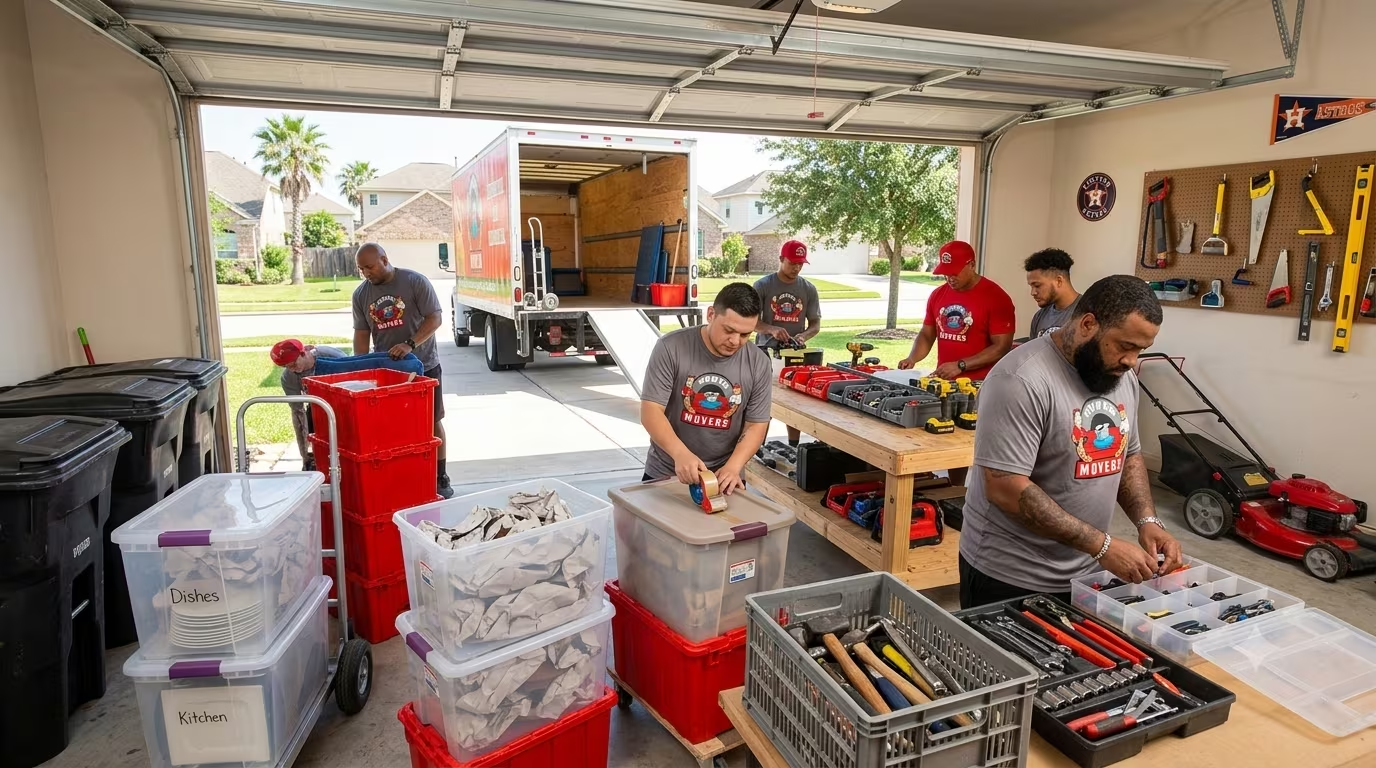
How to Move a Garage: Step-by-step Guide
The garage is usually the hardest room in the house to move. Heavy tools, sharp edges, fuel, chemicals, ladders, bikes, and boxes nobody has opened in years all end up in there. It’s also where movers are most likely to say “we can’t take that.”
Do it in this order: sort, deal with hazardous items, pack by category, label, load. Short sections near the end cover moving the garage building itself and moving a business garage.
The short version: Sort first. Get rid of anything movers can’t legally carry, like fuel, propane, paint, and chemicals. Put tools in small, sturdy boxes, drain every engine, and bundle the long-handled tools. Take shelves and workbenches apart. Label each box “Garage” plus what’s inside. Load heavy items low and against the truck walls.
Table Of Contents[hide]
How to move a garage?
Garages take longer than most people expect. The stuff is heavy and oddly shaped, and every shelf forces another keep-or-toss decision. Walk through yours and write down what’s there: tools, yard equipment, bikes, sports gear, seasonal decorations, paint, a second refrigerator or freezer, shelving, a workbench.
Then measure the garage at your new place, or at least find out whether it has one. A lot of garage stuff isn’t worth moving at all. Every box costs time, and the heavy ones add up fast.
A full two-car garage can take several weekends, so start early. One section a day beats tackling the whole thing in a single stretch.
Step 1: Sort everything into four piles
- Keep and move. Things you’ll use at the new place.
- Sell or donate. Duplicate tools, outgrown sports gear, furniture, anything still in working order.
- Dispose of safely. Broken items, junk, and hazardous materials (see Step 2).
- Keep with you. Anything you need before the move or that movers shouldn’t carry, like important documents and any tools you’ll need on moving day.
Houston has six city-run residential drop-off centers for bulk items, and residents can use them up to four times a month. The city also runs a Reuse Warehouse at 9003 N. Main for reusable building materials. Check the city’s Solid Waste Management site for current hours and rules before you load up.
Step 2: Deal with hazardous items first
This is where most garage moves hit a snag. Under federal rules, hazardous materials include flammable liquids and solids, compressed gases, poisons, and corrosives, and plenty of ordinary garage products fall into those groups. Moving companies aren’t allowed to carry them. Common examples:
- Gasoline, kerosene, and lighter fluid
- Propane tanks and other gas cylinders
- Paint, paint thinner, and solvents
- Motor oil, antifreeze, and other automotive fluids
- Pesticides, fertilizer, and pool chemicals
- Aerosol cans
- Car batteries, and often other batteries as well
- Fireworks and ammunition
Don’t sneak any of these into a box. Federal guidance warns that packing hazardous materials without your mover’s knowledge can limit the mover’s liability for your shipment. And a hidden fuel can or a leaking solvent puts the crew and the rest of your belongings at risk.
What to do with them: Use up what you can, give unopened products to a neighbor, and take the rest to a collection site. Houston’s Environmental Service Centers take a long list of household hazardous items from residents: paint (up to 25 gallons), propane tanks (up to 5 gallons), motor oil, antifreeze, pesticides, fuels, aerosol cans, fluorescent bulbs, and lawn equipment with all fluids removed. Pool chemicals are accepted if they’re dry.
The South center is at 11500 S. Post Oak Rd. and the North center is at 5614 Neches St. Their hours differ, so confirm before you go. Harris County also runs a collection facility by appointment. If you live outside the city limits, check with your own county or municipalit
Step 3: Gather the right supplies
Garage items are heavier than household goods, so the boxes you’d use for linens won’t hold up. You’ll want:
- Small and medium heavy-duty or double-wall boxes
- Plastic bins with lids for small parts and seasonal items
- Packing paper, bubble wrap, and old towels
- Strong packing tape and markers
- Zip bags and clear containers for screws, bolts, and hardware
- Moving blankets, rope or bungee cords, and stretch wrap
- Work gloves
- A hand truck or dolly, and lifting straps for heavy pieces
Step 4: Pack the garage by category
- Hand tools: Fill a toolbox with hammers, screwdrivers, and wrenches, and stuff crumpled paper into the gaps so nothing rattles. The rest goes in small, sturdy boxes. A big box full of metal gets too heavy to lift safely and tends to split open. Wrap sharp edges in towels or cardboard.
- Power tools: Drills, saws, and sanders go in their original cases if you still have them. If not, use sturdy boxes with padding. Take off the attachments, blades, and bits, and put them in a labeled bag taped to the tool. Coil cords loosely. Pull the batteries from cordless tools, then ask your mover whether tool batteries can ride on the truck. Many movers refuse batteries or prefer that you carry them yourself.
- Lawn mowers, trimmers, and other gas-powered equipment: Run each machine until the tank is empty, or drain the fuel and oil into approved containers and dispose of the fluids properly. Movers will take the machine itself, but not with fuel in it. Remove detachable parts such as blades, covers, and handles, and put the hardware in a labeled bag.
- Long-handled yard tools: Bundle three to five rakes, shovels, hoes, or brooms with tape or rope and wrap the bundle in a moving blanket. Cover sharp ends with cardboard or old rags.
- Small hardware.: Sort nails, screws, and bolts into clear containers and label them. "Shelving screws" on a label saves a lot of guessing at the other end.
- Ladders, bikes, and wheelbarrows: Wrap them in moving blankets or padding so they don't scratch anything else. Fold or take apart what you can. Lower bike seats, and take the pedals off if they'll be in the way.
- Workbenches and shelving: If they come apart, take them apart. Bag the hardware and tape the bag to the piece it belongs to. Photograph the setup first so you can rebuild it the same way. In the truck, stand flat panels on edge against a wall.
- Sports gear and seasonal items: Holiday decorations, camping gear, and sports equipment go in plastic bins with lids. Check everything for dampness or mildew before it goes into a bin.
- Second refrigerators and freezers: Empty and unplug them well ahead of the move, at least a day before, and let them defrost and dry. After cleaning, prop the door open so the inside doesn't develop an odor.
- Grills. Take the propane tank off: Dispose of it, or take it with you in your own vehicle, but only if you can do that safely. Clean the grates and firebox.
- Paint and automotive supplies: Paint won't go on the truck. Write the color name and code on a photo or swatch so you can match it later. Car parts go in small, strong boxes. Vehicles ship separately.
Step 5: Label and inventory
Write “GARAGE” plus the category on at least two sides of every box, and mark the heavy ones “HEAVY.” Keep a simple list of what’s in each box. Before packing, photograph high-value items like tool chests and power tools. If you ever file a claim, those photos help.
Step 6: Load heavy and awkward items correctly
- Put heavy boxes and toolboxes on the truck floor, spread evenly and against the walls.
- Shelving panels and the workbench go next, standing on edge.
- Strap ladders, bikes, and wheelbarrows down along one wall.
- Keep sharp or heavy garage equipment away from fragile household goods.
- Fill gaps with smaller boxes. Nothing should be able to slide when the truck turns.
Moving a garage in Houston
- Humidity. Houston summers are humid, often around 75 to 80 percent according to one local storage provider. Cardboard soaks up moisture and weakens. Don’t leave garage boxes on damp concrete, and consider climate-controlled storage if items will wait before delivery.
- Heat. Batteries, adhesives, and plastics don’t do well sitting in a hot truck. Load early in the day and unload promptly.
- Hurricane season. It runs June through November. Leave some slack in your schedule and keep stored boxes off the ground.
- Mold and pests. Garages collect both. Wipe down items and look inside boxes and bins before you pack, so neither follows you to the new house.
DIY or hire movers?
A small garage with ordinary contents can be a good DIY project. Hire professionals if you have heavy equipment, a workbench or shelving that has to come apart, a second freezer, a lot of tools, stairs or a long carry, or a tight schedule. Crews bring the straps, dollies, and blankets, and they load in a way that keeps heavy items from shifting.
If you hire movers, check them first. In Texas, household goods movers must hold an active TxDMV certificate number, and you can look a company up in the department’s database before you book. The moving contract has to state the mover’s liability. Texas guidance notes that a limit as low as 60 cents per pound per item is possible unless you agree to more before the move begins (higher coverage may cost extra). Federal guidance for interstate moves warns that packing your own boxes can also limit a mover’s liability, so ask how that affects your coverage.
FAQs
- Will movers move my lawn mower?
Usually yes, if you drain the fuel and oil first. They won’t carry gasoline. - Can I put a propane tank on the moving truck?
No. Propane cylinders are on the standard list of items movers can’t carry. Use it up, give it away, or take it to a collection site. - What’s the best way to pack garage tools?
Use small, sturdy boxes or a toolbox, fill the gaps with paper, and wrap sharp edges. Heavy tools in big boxes are a common cause of broken boxes and injuries. - What do I do with leftover paint and chemicals?
Take them to a household hazardous waste collection site. Don’t pour them down drains or put them in regular trash. - How early should I start packing the garage?
Start before anything else. It’s the room that takes longest and holds the most items that need special handling. - Can the garage building be moved?
Yes, with a licensed structural mover, a permit, and a prepared foundation. It’s a different type of project from a household move.
Power Movers does local, long distance, residential, commercial, and specialty moves in Houston, TX, plus packing and moving help. If your garage is full of heavy tools, equipment, and years of stuff, contact Power Movers for a quote.
Sources
- Federal Motor Carrier Safety Administration, “Understanding valuation” (Protect Your Move)
- Texas Department of Motor Vehicles, “When You Move in Texas”
- Texas Department of Motor Vehicles, moving checklist
- City of Houston Solid Waste Management Department, Environmental Service Centers and Residential Drop-Off Centers
- Angi, “How to Move a House”

Article written by
Gary founded Power Movers in 2007 after watching too many moving companies damage or steal from customers with no consequences. The company runs on one rule: every crew member gets background-checked, trained, and held to the same standard Gary was held to as a police officer. Over 9 years in, Power Movers handles local and long-distance moves, specialty items, and corporate relocations for Houston businesses including Tesla and Airgas.