
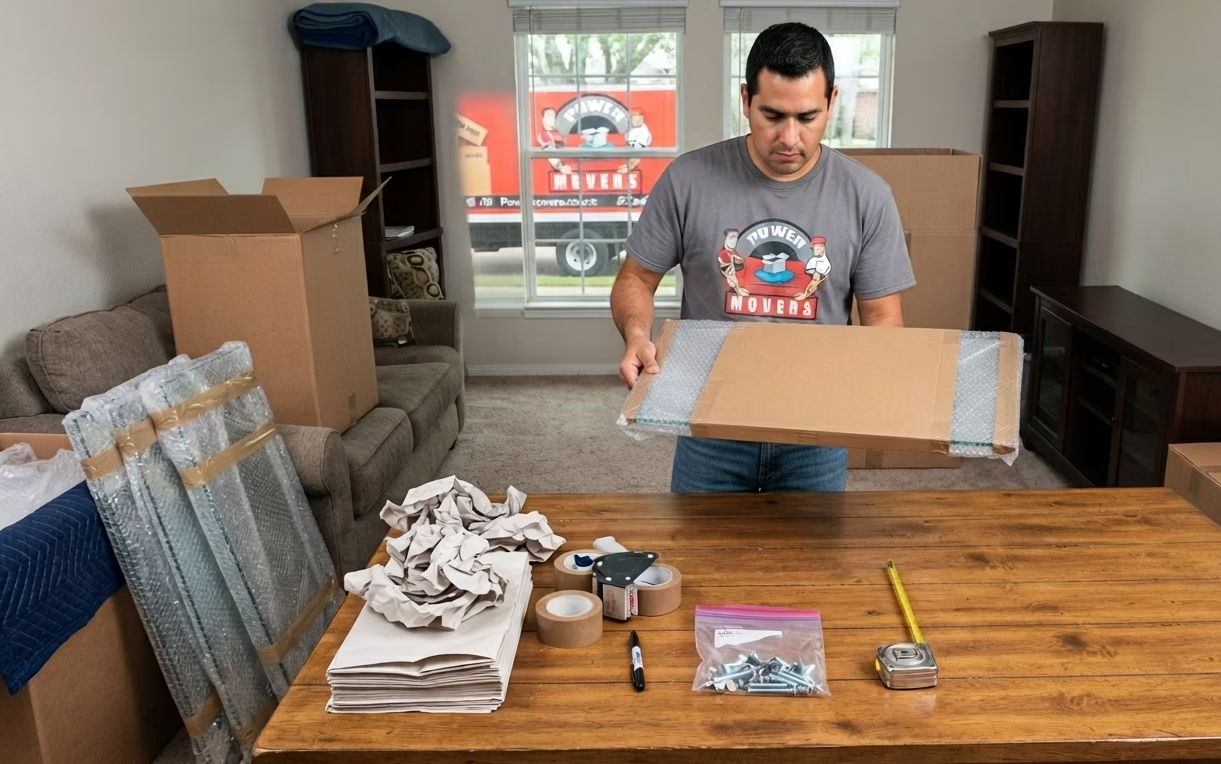
How to Pack Glass Shelves for moving?
Glass shelves are among the easiest things in a house to break during a move. They’re heavy for their size and the edges chip easily. One bump against a doorframe can crack a shelf you’ve owned for 15 years. The fix is cheap, though: a few supplies, about 20 to 30 minutes per piece of furniture, and a method that covers the glass on every side. This guide goes from taking the shelves out of a cabinet to loading them on the truck and unpacking them at the other end.
The short version: take the shelves out, clean and inspect each one, wrap it in plain paper and then bubble wrap, put it between two sheets of cardboard, and stand it on its edge in a padded box. Label the box. Load it upright, strapped in, and away from anything heavy.
Table Of Contents[hide]
Why glass shelves break in transit?
Most breakage comes from four things:
- Edges take the hits. A small chip on an edge can spread into a crack later, and on tempered glass a damaged edge can make the whole shelf fail.
- Flat is weaker than upright. Glass handles pressure along its edges better than pressure across its face. That’s why shelves travel standing on edge, not lying flat.
- Bending and uneven support. A box stacked on a flat shelf, or a shelf resting on something at one end with the other end hanging, puts bending force on the glass.
- Trapped grit. Dust or dirt between the glass and the wrapping can scratch the surface as everything shifts on the road.
Know what kind of glass you have, too. Tempered glass often has a small etched stamp in one corner and crumbles into small pieces when it breaks. Regular (annealed) glass breaks into sharp shards. You can’t reliably tell them apart by looking, so pack every glass shelf as if it can’t be replaced.
Things you'll need
- Cut-resistant work gloves and safety glasses
- Plain, unprinted packing paper
- Bubble wrap
- Corrugated cardboard sheets, cut a little larger than each shelf
- Cardboard or foam corner protectors
- Mirror boxes, picture boxes, or double-wall boxes slightly larger than your shelves
- Packing tape, plus painter’s tape
- Moving blankets and stretch wrap
- Small zip bags for shelf pins and clips
- A permanent marker
- A soft cloth and glass cleaner
- A tape measure
Buy the boxes first. Measure the length and width of your biggest shelf, add an inch or two on each side for padding, and make sure a box that size exists before packing day.
Steps to Pack Glass Shelves for moving
Step 1. Count, measure, and plan
Count your shelves and note their sizes. If they’re all different, number them now so each one goes back in its original slot. Then decide whether each shelf gets its own box or rides as a padded bundle in blankets.
Step 2. Gear up and empty the shelves
Put on gloves and safety glasses before you touch any glass. If you want to put things back the same way, take a quick photo of the arrangement before you clear the shelves. Then take everything off and pack the contents separately.
Step 3. Take the shelves out carefully
Open or remove the cabinet doors first so you have room to work. Support each shelf from underneath with both hands, lift it straight up off its pins or brackets, and slide it out flat. Don’t tilt it sharply, because that’s how edges strike the frame. Long or heavy shelves need a second person.
Drop the shelf pins, clips, and screws into a labeled zip bag and tape the bag inside the furniture so it travels with the piece. Later, put a strip of masking tape with the shelf’s number on the paper wrapping, not on the glass.
Step 4. Clean and inspect each shelf
Wipe both sides with a soft cloth until they’re dry and free of grit. Then check all four edges and corners in good light for chips and hairline cracks, and photograph any existing damage. A shelf with a crack or a noticeable chip is a risk even before it’s packed. Pack it with extra care, or plan to replace it instead of paying to move it.
Step 5. Wrap in layers
- Fit a cardboard or foam corner protector over each corner. Corners and edges are the weakest spots.
- Wrap the shelf in two or three layers of plain packing paper. Paper goes against the glass first, because bubble wrap placed directly on glass can leave marks.
- Add a layer of bubble wrap over the paper.
- Tape the wrap to itself. Keep tape off the glass surface, since adhesive residue is hard to remove.
Step 6. Build a cardboard sandwich
Put a flat sheet of cardboard on each side of the wrapped shelf, then tape the two sheets together around the edges. The result is a stiff panel that resists flexing and cushions the edges. Worth doing for any large or valuable shelf.
Step 7. Box it or blanket it
In a box: Use a mirror box, picture box, or double-wall box. Line the bottom with a few inches of crumpled paper, stand the shelf on its edge, and fill the gaps on both sides with paper or foam so nothing can slide. Give the box a gentle shake. If you feel movement, add more padding. Packing several shelves in one box? Separate each one with cardboard or foam so they can’t touch.
In blankets: Wrap the sandwich in a moving blanket and put stretch wrap over the blanket, not the glass. This works well for local moves, as long as you can keep the bundle upright in the truck.
Don’t overfill the box. Glass is heavy, and a box too heavy to carry comfortably is a box that gets dropped. Tape the bottom and top seams in an H pattern for strength.
Step 8. Label every box
Write on at least the top and two sides: FRAGILE, GLASS SHELVES, THIS SIDE UP, DO NOT STACK. Add the room, the furniture piece the shelves belong to, and the shelf numbers. Movers, and you, will load and unload faster when the label tells them what’s inside.
Should you put tape on glass?
Advice on this conflicts. For shelves, the safest rule is to keep tape off the glass and stick it only to paper, bubble wrap, blankets, or cardboard. Some movers put painter’s tape in an X across large mirrors and panes so shattered pieces stay together if the glass breaks.
It doesn’t prevent breakage, and a shelf rarely needs it. If you do use it, choose painter’s tape, apply it to clean glass, and remove it soon after the move. Heat makes adhesive harder to clean off, which matters if boxes will sit in a hot truck or storage unit.
Packing glass shelves from different kinds of furniture
China cabinets and curio cabinets. Remove the shelves and doors and wrap each piece separately. Pad the cabinet itself with moving blankets. Don’t wrap the wood finish in bubble wrap, which can mark it. Wrap any loose parts and secure them separately.
Bookcases and display units. Pull the shelves out, bag the hardware, and use the same paper, bubble wrap, and cardboard method. Tape a copy of your numbering to the unit so each shelf goes back in the slot it came from.
Floating and wall-mounted glass shelves. These are often set into grooves or held with brackets and adhesive, so check the manufacturer’s instructions before removing them. If they’re glued in, have a professional take them down.
Glass table tops and tabletop shelves. Same layers: paper, bubble wrap, corner protectors, then a cardboard sandwich. Put larger panes in a mirror box.
Curved, antique, or very large glass. Leave these to professionals. They’re harder to wrap, harder to replace, and easier to damage when lifted.
Loading and transporting glass shelves
Packing is half the job. The other half is how the boxes ride.
- Upright only. Stand the boxes or blanket bundles on their edge, like a pane of window glass. Never lay them flat.
- Load last, unload first. Put the glass on near the end of loading so nothing gets stacked around it, and take it off first.
- Keep it away from heavy items. Furniture can shift on turns and brakes. Place glass where nothing heavy can slide into it.
- Nothing on top. Don’t set boxes or anything else on glass boxes.
- Strap it down and pad the sides. Secure the load with straps over blankets so it can’t slide or tip, and add padding between the glass and the truck wall to absorb vibration.
Houston-specific tips
- Humidity. Houston summers run humid, around 75 to 80 percent on average (according to one local storage provider). Cardboard weakens when it stays damp. If your shelves will wait in storage for more than a few days, use a climate-controlled unit and keep boxes up off the floor.
- Heat. Don’t leave glass boxes sitting in a parked vehicle or an unventilated garage. Load during the cooler part of the day, and get the glass out of the truck first at delivery.
- Hurricane season. It runs June through November, so leave some slack in your schedule and keep stored boxes off the ground.
- Apartments and high-rises. Book the elevator and loading dock in advance. A long carry with a sheet of glass is where things get dropped.
When to hire professional movers?
Doing it yourself works if you have a few standard shelves and some time. Call a pro if you have many shelves, oversized or curved glass, a high-rise move, built-in or glued-in glass, or a long-distance move where the boxes will be handled many times. Professional packers bring the right supplies and know how to load glass so it doesn’t shift.
If you hire movers, ask about coverage before moving day. Under federal rules for interstate moves, movers must offer Full Value Protection and Released Value coverage. Released Value limits the mover’s liability to 60 cents per pound per article. Within Texas, household goods movers must hold an active TxDMV certificate number, and the contract has to spell out the mover’s liability. You can agree on a higher level of liability before the move begins, though the mover may charge extra for it.
Two more things help. Check any mover on the TxDMV database before you book, and note any damage on every copy of the moving contract as soon as you find it. If you need to file a claim, the mover must receive it within 90 days of delivery or it can be denied. Keep the damaged item and its packaging too, since that helps the inspection.
FAQs
Better not to. Pack them on edge, in a box with padding on both sides, so the glass carries weight along its strongest direction.
Wrap them in plain paper first, then add bubble wrap on top. The paper protects against scratches and marks from the bubbles.
Stand it upright, either wrapped in a blanket or in a cardboard sandwich, with padding on both sides. Keep it away from sharp objects, and don’t put anything on top of it.
Not always. A mirror box or picture box is the easiest way to protect a large flat shelf, though a double-wall box with plenty of padding also works, and moving blankets suit local moves.
Pack the glass first, since it needs the most care, and let professionals handle the rest. Power Movers offers packing services for homes and businesses.
Power Movers does local, long distance, residential, commercial, and specialty moves in Houston, TX, and can help with packing too. If you’d rather not leave your glass shelves to a roll of bubble wrap and a free Saturday, contact Power Movers for a quote.
Sources

Article written by
Gary founded Power Movers in 2007 after watching too many moving companies damage or steal from customers with no consequences. The company runs on one rule: every crew member gets background-checked, trained, and held to the same standard Gary was held to as a police officer. Over 9 years in, Power Movers handles local and long-distance moves, specialty items, and corporate relocations for Houston businesses including Tesla and Airgas.