
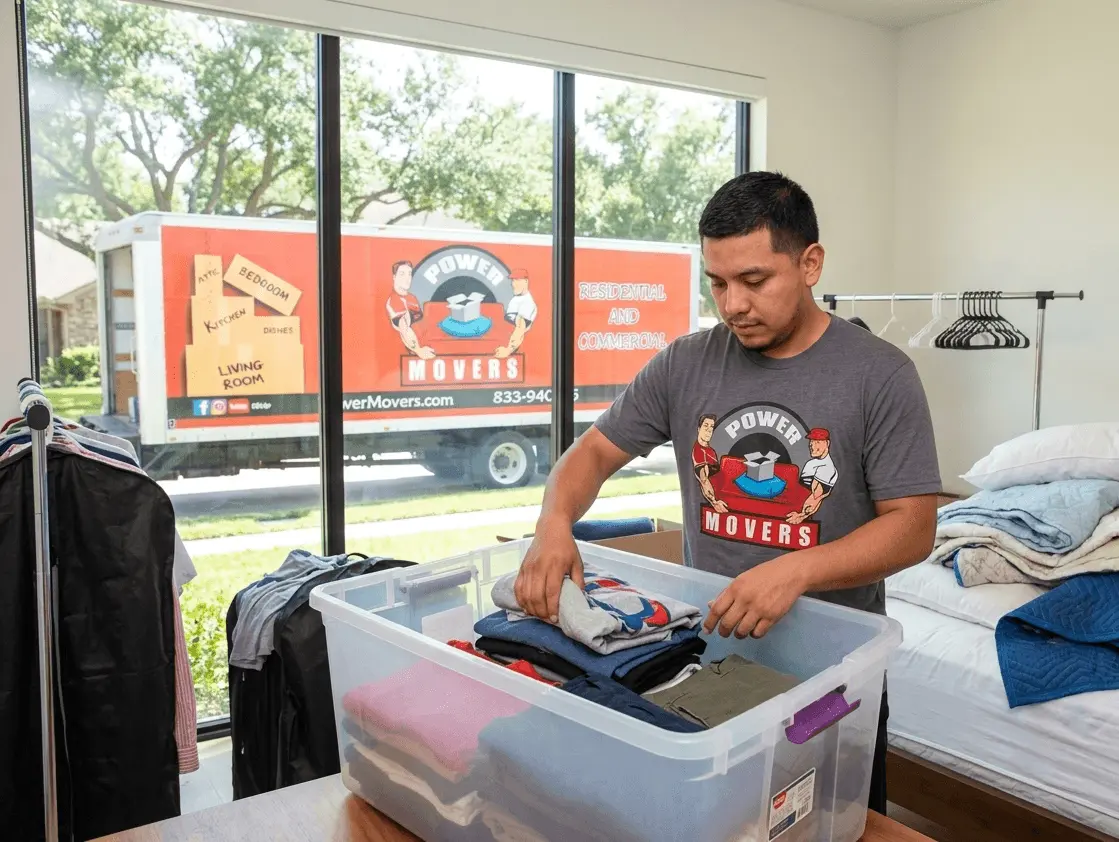
How to Pack Clothing for a Move?
Knowing how to pack clothing for a move can save you hours of unpacking, keep your wardrobe free of wrinkles and musty smells, and keep your boxes from becoming too heavy to lift. Clothes seem like the easy part of moving, but a few common mistakes cause most of the problems: packing damp items, overstuffing boxes, using the wrong container for hanging garments, and burying the outfits you need most.
- Declutter first. Don't pay to pack and move clothes you no longer wear.
- Wash and fully dry everything before it goes into a box. Damp clothes can develop mildew.
- Use wardrobe boxes for hanging clothes and medium or large boxes, bins, or suitcases for folded clothes.
- Put heavy items in small boxes and light items in big boxes. Denim, shoes, and winter coats get small boxes.
- Pack an essentials suitcase with several days of outfits and keep it with you.
- Label boxes by person, room, and season, and treat delicate or valuable garments with extra care.
Table Of Contents[hide]
Step 1: Declutter Your Closet
Packing clothes you’ll never wear is the fastest way to waste time and money. Before you touch a box, sort your wardrobe into piles:
- Keep and move
- Donate
- Sell
- Recycle (stained, torn, or worn-out items)
- Discard
- Pack later (out-of-season or special-occasion items)
Ask yourself a few quick questions about each piece:
- Have I worn it in the last year?
- Does it fit and feel comfortable?
- Is it in good condition?
- Will I wear it in my new location or climate?
- Do I own something similar that I wear more often?
Think about your new climate. If you’re moving from a cold state to a warm one, you probably need far less winter clothing. If you’re leaving Houston for somewhere colder, the opposite may be true, and you’ll want your coats, boots, and layers accessible when you arrive.
Sell or donate. Quality pieces in great condition can often be sold. Everything else can go to a charity. Goodwill Houston and the Salvation Army accept clothing, but call ahead to confirm what they take and whether they offer pickups, and schedule early because the weeks before a move are busy.
Step 2: Pack an Essentials Suitcase
Before the rest of your wardrobe goes into boxes, set aside the clothes you’ll need during the move and for the first few days in your new home. Moving is physical, and your moving truck may not arrive right away, so pack for several days.
- Outfits for several days for each person, including pajamas, underwear, and socks
- Comfortable shoes and one pair of sturdy shoes for work
- A few old shirts or workout clothes you don’t mind getting dirty or sweaty
- An extra outfit in your car in case something spills on your moving-day clothes
- Weather-appropriate layers, such as a jacket or a rain jacket
- A small bag for dirty clothes
Use the suitcase’s pockets for small items like chargers, and wrap shoes in a bag to keep clothing clean. Rolling clothes or using packing cubes saves space. Keep this suitcase with you in your own vehicle, not on the moving truck.
Step 3: Wash, Dry, and Prep Your Clothes
This step is easy to skip and expensive to skip. Clothes packed damp or dirty can end up with mildew, odors, stains, and pest problems.
- Wash or dry-clean everything you plan to pack, especially anything going into long-term storage. Follow the care labels.
- Make sure every item is completely dry. University extension services consistently warn that clothing stored damp can develop mildew. If you can, let freshly laundered clothes air out overnight before packing so trapped moisture can evaporate.
- Check pockets, zip zippers, and fasten buttons and hooks so nothing snags.
- Remove jewelry and other accessories from clothing.
- Take dry-clean-only pieces to the cleaner early.
- Mend or treat stains now, not after they’ve set in a box.
Clean clothes are also less attractive to pests. According to extension specialists, clothes moths and carpet beetles can thrive once they get into storage boxes or bags, and body oils, food residue, and sweat make clothing more attractive to them.
Step 4: Choose the Right Container for Each Type of Clothing
The right container does half the work. Here’s a quick guide:
Clothing type | Best container | Tip |
Hanging clothes (shirts, dresses, suits, coats) | Wardrobe box | Don’t overfill it. A heavy load is hard to lift and can strain the hanging bar. |
A few high-value or formal pieces | Garment bag | Not efficient for a whole closet, but great for a few delicate items. |
Hanging clothes on a short local move | Rolling garment rack or the back seat of your car | Secure the clothes so they can’t slide or wrinkle. |
Everyday folded clothes | Medium box | Keep it liftable and label it by person or season. |
Lightweight items (T-shirts, sweaters, linens) | Large box | Don’t fill it with heavy jeans or shoes. |
Dense or heavy items (jeans, shoes, winter coats) | Small box | Small boxes keep the weight manageable. |
Clothes you’ll need soon after arrival | Suitcase | Great for shoes and delicate items too. |
Clothes going into longer storage | Lidded plastic bins | Make sure items are clean and completely dry first. |
Light clothing in a light dresser | The dresser drawers | Secure the drawers with stretch wrap. |
Bulky bedding and coats | Vacuum bags | Use with caution. They can crease or damage some fabrics. |
Timeline
Step 5: Pack Hanging Clothes
Wardrobe boxes (best for most moves): A wardrobe box has a built-in hanging bar, so you can move clothes from your closet rod to the box without folding them. This keeps dresses, suits, coats, and blouses wrinkle-free and organized.
- Assemble the box and tape the seams.
- Set the hanging bar into its pre-cut grooves.
- Move a manageable group of hangers from your closet to the bar.
- Place lightweight items, such as shoes, belts, or purses, at the bottom if there’s room.
- Close the box, label it, and tape it shut.
- Keep the box upright during transport.
The trash bag method (short local moves only): Gather a bundle of hangers, pull a heavy-duty trash bag up from the bottom, and tie it around the hanger tops. It’s quick and cheap, and it works well for a short local move when you’re driving clothes in a car with nothing rubbing against them. For long-distance moves or loading onto a truck with other items, trash bags don’t offer enough protection. They tear easily and can leave your clothes dirty or damaged.
Garment bags and rolling racks: Use garment bags for a few formal or high-value pieces. For a short local move, a rolling garment rack can be rented in some places. Secure the clothes so they stay put.
Step 6: Pack Folded Clothes
- Fold or roll: A common rule is to roll soft, stretchy items like T-shirts and leggings to save space, and fold stiffer pieces like blazers and dress shirts to avoid wrinkles.
- Line the box: Add a layer of packing paper to keep clothing clean.
- Layer by weight: Put heavier items like jeans on the bottom and lighter items on top. Alternate the direction of each layer, with necklines and waistbands on opposite sides, to keep the stack even and maximize space.
- Don't overpack: It's tempting to fill a large box with jeans and pants, but the box gets heavy fast. NIOSH, the federal workplace-safety research agency, builds its lifting guidance around a 51-pound load constant, which is the most it recommends lifting even under ideal conditions. Keep boxes well under 50 pounds.
- Use suitcases and duffel bags: They're already built to move, and they carry clothing well. Save a few for your essentials, and use the rest for everyday and off-season clothes.
- Keep outfits organized: Pack by person or by season, so you don't have to dig through every box to find a work outfit. If you have a favorite piece you'll need soon after the move, note which box it went into, and consider photographing or listing your most important pieces.
- Use packing cubes to compress and separate items inside boxes or suitcases.
Step 7: Dressers: Leave the Drawers Full or Empty Them
If your dresser is light enough to move safely, you can often leave lightweight clothing inside it. That saves packing time and keeps clothes organized.
Dresser situation | What to do |
Light dresser, light clothes | Keep the drawers in place, and wrap the whole dresser in stretch wrap to keep drawers from sliding open. |
Heavy dresser or dense drawer contents | Remove the drawers and carry them separately. Wrap each one in stretch wrap. |
Loose or removable drawers | Use stretch wrap to keep them closed. |
Antique, fragile, or valuable dresser | Ask a professional mover for guidance. |
Tips: Avoid putting tape directly on finished wood, since adhesive can damage it. Remove breakables, liquids, and heavy items from the drawers first. Before you remove drawers, label them with painter’s tape so they go back in the right spots. And always ask your mover whether they’re comfortable with drawers left full.
Step 8: Pack Special Items
- Shoes. Pack them separately from clothing so dirt doesn’t transfer. Wrap each pair in a bag or paper, and pack them in a small box, since shoes are heavy.
- Coats and bulky items. Pack winter coats, sweaters, and bedding in small or medium boxes, or use vacuum bags for short periods. Vacuum bags save space but can crease or damage some fabrics, so avoid compressing delicate materials or keeping anything compressed for a long time.
- Suits and formalwear. Use a wardrobe box or garment bag, and keep these pieces on hangers. Follow the care label.
- Wedding dresses and heirloom garments. For long-term keeping, museum conservators recommend padded hangers for sturdy garments, or flat storage for fragile ones, with acid-free tissue or clean unbleached muslin to cushion folds. They also advise against storing textiles in plastic bags or sealed plastic boxes, which can trap moisture. For a move, consider a breathable garment bag or a box with acid-free tissue, and keep the garment with you if you can. If it’s a valuable piece, ask a professional cleaner for advice.
- Leather, fur, silk, and wool. Follow the manufacturer’s care instructions. These materials do best in breathable containers away from heat and moisture.
- Belts, ties, scarves, and hats. Roll belts and ties, and keep hats in a box or bag so they hold their shape.
- Underwear and delicate items. Pack them in a suitcase or a small bag that you keep with you.
- Jewelry and valuables. Keep these with you. Don’t pack them in clothing boxes.
- Kids’ clothes. Pack a few days of outfits in a bag you can reach easily, and box the rest by size and season.
Step 9: Label and Load
Three details on each box make unpacking much faster: the owner or room, a short description such as winter coats or work shirts, and the season. If you have wardrobe boxes, label them on more than one side.
When loading, keep wardrobe boxes upright, and place clothing boxes where nothing heavy can crush them. Put your essentials suitcase in your own vehicle.
Local Move vs. Long-Distance Move
- Local move: You can often transport hanging clothes in the back seat of a car or on a rolling rack. Trash bags work in a pinch.
- Long-distance move: Clothes will spend more time in transit, with more handling and more chances for moisture or rubbing. Use wardrobe boxes for hanging clothes, sturdy boxes or bins for folded clothes, and consider moisture absorbers in humid weather.
Packing Clothes for Storage During a Move
If your clothes will sit in storage for weeks or months, extra care pays off.
- Clean and dry everything first.
- Use breathable options for hanging clothes, such as cotton garment bags. University extension guidance warns against storing clothing in plastic bags, since moisture can build up and lead to mildew, yellowing, dye bleeding, and odors.
- Use lidded plastic bins for folded clothing, and don’t pack them too tightly.
- Avoid long-term cardboard storage in humid conditions, since cardboard absorbs moisture.
- Keep boxes off the floor.
- Consider climate-controlled storage, especially in humid or hot areas.
- Limit vacuum storage to a short time, and avoid creasing delicate areas.
- Protect against pests by packing only clean clothes in clean containers.
Packing Clothes in Houston, TX: Humidity, Heat, and Local Tips
Humidity is the main concern. Houston’s climate is warm and humid for much of the year, and that’s an ideal environment for mildew. Make sure everything is completely dry before it goes into a box. If you’re moving in humid weather, consider adding moisture absorbers to boxes and bins, and don’t leave packed clothing boxes sitting in a garage or on a damp floor.
Heat matters too. In late July 2026, forecasters expected heat index values of 108 to 110°F in the Houston area. A closed truck or a parked car gets even hotter. Keep delicate or valuable garments, such as leather, silk, formalwear, and wedding dresses, with you in an air-conditioned vehicle. Avoid leaving clothing boxes in a hot, closed vehicle or garage for long stretches, since trapped heat and humidity can lead to odors and mildew.
Pack in comfort. Packing is physical work. OSHA and NIOSH advise drinking water every 15 minutes when working in hot conditions and taking frequent breaks in the shade or in air conditioning.
Check your destination’s weather. If you’re moving out of Houston to a colder climate, keep your coats and cold-weather layers in an easy-to-reach box or suitcase.
Storage. If your clothes need to sit in storage, ask about climate control, since many Houston-area storage units aren’t air-conditioned.
Common Mistakes
- Packing clothes you no longer wear
- Packing damp, dirty, or recently washed items that haven’t fully dried
- Overfilling wardrobe boxes or filling large boxes with heavy clothes
- Using trash bags for hanging clothes on a long-distance move
- Storing clothing in plastic bags for the long term
- Taping dresser drawers directly to finished wood
- Forgetting to check pockets and fasten zippers
- Packing valuables and jewelry in clothing boxes
- Burying the clothes you’ll need right away
- Skipping labels
If you’d rather not spend your weekends folding and boxing, we can help. Our packing and unpacking services can pack your closet and the rest of your home, and our packing supplies can help if you’re doing it yourself. If you need strong hands for loading and unloading, ask about moving labor. We also handle local moves and long-distance moves, and our specialty movers can handle delicate or high-value pieces. We serve Houston, Spring, Katy, Sugar Land, and Cypress.
Ready for help? Call (832) 940-6683 or request a free quote.
Sources:
- Iowa State Extension, storing clothing
- Kentucky Extension, storing winter clothes
- Kentucky Extension, clothing and shoe storage
- UGA Cooperative Extension clothing storage tips
- Mississippi State Extension, moths in storage
- National Park Service, padded hangers
- National Park Service, dust covers
- Oklahoma State 4-H, preserving textiles
- NIH safety newsletter on the NIOSH lifting equation
- OSHA/NIOSH hazard alert, working in hot weather
- KPRC Click2Houston, Houston heat
- CultureMap Houston, donation pickups

Article written by
Gary Williams founded Power Movers, a Houston moving company with more than 1,000 reviews. He spent 12 years with the Houston Police Department’s Central Division, where moving-company complaint calls were part of what pushed him to start the business. Power Movers has worked with Tesla, Lululemon, and the Houston Rodeo, and is featured in Forbes Advisor’s Best Moving Companies in Houston list.