
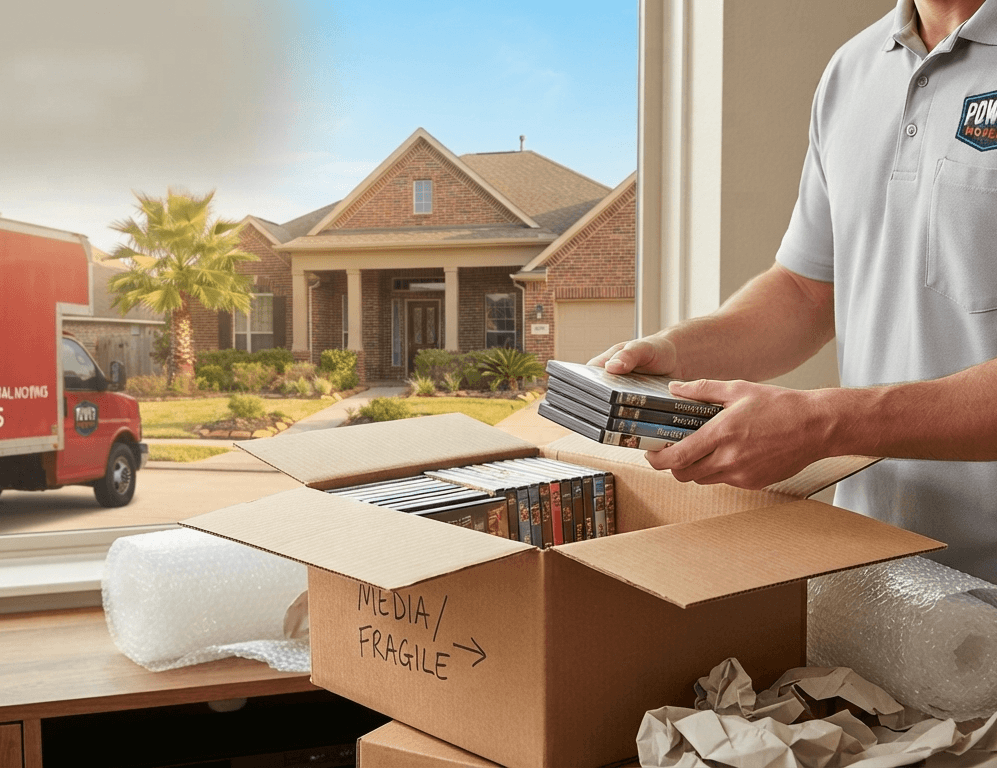
How to Pack DVDs for Moving Without Cracking Cases or Scratching Discs
TL:DR
- To prepare your DVD collection carefully before moving it to a new home. You have to sort them by which ones to keep, sell, or donate, and which are damaged.
- DVDs should ideally remain in their original cases because the cases protect the discs from scratches, dust, and other damage. For DVDs without cases, use proper protective sleeves and keep each disc separate rather than placing them directly against one another.
- You can use small to medium size boxes to pack DVDs, and fill the gaps so nothing moves.
- Don’t put too many DVDs in one box, it can damage the box when moving, DVDs are denser than they look, and label the boxes with the room where they’ll go, and contents.
- Make sure to keep the DVDs out from hot cars, away from direct sunlight and moisture as excessive heat inside a vehicle can damage both the discs and their cases.
How to Pack DVDs for Moving
Packing a DVD collection can seem simple at first, but a large collection can quickly become difficult to organize and move. DVDs may be small, but many discs together can take up a lot of space and become quite heavy.
It is also important to check for cracked cases, loose discs, and missing items before packing. Damaged DVDs can easily get worse during transportation. The good news is that packing DVDs does not require special equipment. With proper packing materials, careful sorting, and clear organization, you can safely move your collection and easily arrange it again in your new home.
Can you pack DVDs yourself?
Yes, DVDs are fairly easy to pack yourself, but they still need proper care. DVDs can get scratched easily, while their plastic cases may crack if they are dropped or packed too tightly. Start by checking your collection and keeping damaged or loose discs separate.
Keep DVDs in their original cases whenever possible, and use protective sleeves for loose discs. Pack them in strong, small or medium-sized boxes because DVDs become surprisingly heavy when packed together. Avoid leaving empty spaces that allow the discs to move around. With careful packing and proper organization, you can safely move your DVD collection without much trouble.
Things you'll need
Packing DVDs does not require many special supplies. Most of the materials you need can be found at a hardware store, office supply store, or general retailer.
- Strong small or medium sized boxes are important because they keep the DVDs secure and make the boxes easier to carry.
- Heavy duty packing tape can be used to seal the boxes properly.
- Permanent marker and labels help you identify the contents later.
- Packing paper or bubble wrap can be used to fill empty spaces and provide extra protection.
- Towels or soft clothes can also work if you want to use materials you already have at home. Plastic bags or dividers can help keep box sets and different categories organized.
- Disc sleeves are useful for protecting DVDs that do not have cases.
- Small zip bags can hold loose inserts or accessories.
- A measuring tape can help you choose boxes of the right size.
You do not need expensive specialty equipment. Basic packing materials are usually enough to keep your DVD collection safe during the move.
Sort & Preparation
Preparing your DVD collection before packing can save a lot of time and prevent confusion later.
- Start by making a rough count of your DVDs so you can estimate how many boxes you will need.
- Sort them into categories such as genres, series, or any order that feels natural to you.
- Check the condition of the cases and separate anything damaged. A cracked case does not necessarily mean the disc is damaged, as replacement cases can be purchased easily.
- Keep loose discs and valuable or collectible editions separate so they receive extra care.
- Before packing, make sure each case has the correct disc, artwork, and inserts. These small items can easily get mixed up during a move.
- If you have a large collection, write down what is placed in each box or take a photo of your shelves for reference. Finally, pack everything on a clean and dry surface to avoid scratches, dirt, or moisture damage.
Steps to Pack DVDs for Moving
Packing DVDs safely requires a simple and organized approach.
- Start by working in a clean and dry area to protect the discs from scratches and moisture.
- Keep DVDs in their original cases whenever possible and group them according to their categories.
- Use strong boxes that are not too large, and place some packing material at the bottom for cushioning.
- Arrange the DVDs upright, with the spines facing outward, as this keeps them stable and makes them easier to find later. Do not overfill the box or leave large empty spaces.
- Use packing paper, bubble wrap, or soft towels to fill gaps and prevent movement. Add some padding on top before closing the box.
- Seal it securely with tape and label it clearly.
- When loading the boxes, keep them away from heavy items that could crush or damage the cases.
Standing DVDs upright is generally the safest and most practical method.
Cases, loose discs, and box sets
Keeping original DVD cases intact is important because they protect the discs from scratches, dust, and damage while also keeping the artwork and information with the correct title. If a case does not stay closed properly, you can use a small piece of tape along the edge to keep it secure during transportation.
Loose discs need extra protection because stacking them together can cause scratches. Place each loose disc in its own paper or plastic sleeve designed for discs. Make sure the bare surfaces do not touch each other or come into contact with hard surfaces. Label each sleeve so you can easily identify the disc later.
Box sets and special editions need additional care because their packaging can be more delicate than regular plastic cases. Keep them closed and pack them upright. Give them some extra cushioning and avoid placing them where other DVDs could bend or damage their packaging.
Things you'll need
Large Collections and Box Weight
For a large DVD collection, good organization is just as important as careful packing. Divide the DVDs into categories and number each box clearly. For example, you can label a box with the category and the titles it contains. Keeping a simple list of the contents can also make unpacking much easier.
There is no exact number of DVDs that should go into one box. The box should be comfortably full, stable, and easy enough to carry safely. DVDs can become surprisingly heavy when packed together. Smaller boxes are usually better because they are easier to lift and less likely to become overloaded. If a box feels too heavy before it is full, divide the DVDs between two boxes instead.
Protecting DVDs from heat and moisture
Heat and moisture can both cause problems for DVDs during a move. High temperatures can affect the materials of the discs and may also damage their plastic cases. A vehicle parked in direct sunlight can become much hotter inside than the outside temperature, which is especially important to consider during a hot Houston summer. Try to keep DVD boxes out of direct sunlight and avoid leaving them inside a hot vehicle for longer than necessary.
Moisture is another important concern. Water and high humidity can damage DVDs, cases, artwork, and other packaging. Avoid storing DVD boxes in damp areas such as garages or basements for long periods. If there is a possibility of flooding or leaks, keep the boxes raised off the floor.
Also, make sure everything is completely dry before sealing the boxes. These simple precautions can help protect your collection from heat and moisture damage during the move.
Things you'll need
Labelling and loading
Labelling DVD boxes clearly can make the unpacking process much easier. Include the room where the box belongs, the box number if needed, and a short description of its contents. For example, you can write the type of DVDs and the range of titles inside. Clear labels help you find things quickly and reduce the chance of accidentally leaving a box behind.
When loading the boxes, keep them level and avoid placing heavy items on top of them. Make sure the boxes are secure so they do not slide around when the vehicle brakes or turns. For a long distance move, use strong boxes because they may be handled several times during transportation.
If you own DVDs that are especially valuable or difficult to replace, consider keeping them with you instead of placing them in the moving vehicle. This provides extra protection and peace of mind.
What it costs to pack DVDs yourself
The cost of packing a DVD collection depends on how many DVDs you have, which supplies you already own, and where you purchase the materials. If you reuse strong boxes and use towels or clothes for cushioning, you may be able to pack a small collection with very little extra cost. Buying new boxes, packing tape, and disc sleeves will increase the expense, especially for a large collection.
You can save money by reusing sturdy boxes instead of buying new ones. Towels, blankets, and clothing can also protect DVDs without requiring extra packing materials. Before purchasing supplies, sort through your collection and remove anything you no longer want to keep.
This reduces the number of DVDs you need to pack and means you will need fewer boxes and less packing material. Comparing prices at different stores can also help you find better deals when buying supplies in larger quantities.
Common Mistakes to Avoid
- Packing loose discs without protective sleeves, which can cause scratches when the discs rub against each other.
- Using boxes that are too large can also be a problem because the DVDs may move around and the cases can crack.
- Overloading boxes makes them too heavy and difficult to carry safely.
- Leaving large empty spaces inside boxes can also allow the DVDs to shift during transportation.
- DVD boxes should not be placed under heavy items because the pressure can damage the cases.
- Avoid leaving the boxes inside a hot car for several hours, especially during a Houston summer.
- Not labeling your boxes clearly and make sure inserts and artwork stay with their correct cases so nothing gets lost or mixed up.
When DIY packing isn't enough
Packing your own DVDs is usually a good choice, especially when you have a small or medium sized collection. However, there are situations where getting extra help may be a better option.
Very large collections can take a lot of time to sort, pack, and move because they require many boxes. Valuable or collectible DVDs also need extra care because they may be difficult or expensive to replace if they are damaged.
Long distance moves can create additional risks because the boxes may be handled and transported several times. If you have limited time, difficulty carrying heavy boxes, or do not have a suitable vehicle, asking for help can make the process safer and easier.
You do not necessarily need to hire someone for the entire move. You can pack your DVDs yourself and get professional help for furniture, appliances, and other heavy items. This allows you to stay involved while avoiding unnecessary physical strain.
How Power Movers Can Help
Power Movers can make the moving process easier when packing and transporting your DVD collection feels like more work than expected. Their moving team can help with handling boxes, loading, transporting, and unloading your belongings safely. This can be especially useful when you have a large DVD collection that becomes heavy once packed into several boxes.
You can also choose to pack your DVDs yourself while getting help with the heavier parts of your move. This gives you control over how your collection is organized while reducing the physical effort involved in moving everything. Professional movers can also help make sure your packed boxes are handled carefully during loading and transportation.
For valuable or delicate DVD collections, careful handling is particularly important. With the right preparation and reliable moving assistance, you can reduce the chance of damaged cases, misplaced boxes, or unnecessary stress. Power Movers can take care of the physical work while you focus on keeping your collection organized and ready for its new home.
Conclusion
Packing DVDs yourself is a practical option for most collections if you take some time to organize them properly. Sort the DVDs first, protect loose discs, use strong boxes that are easy to carry, and protect the collection from heat and moisture during the move. The main thing to consider is the amount of time involved.
A small collection may take only a few hours, while a large or valuable collection can take much longer to pack carefully. Before deciding to do everything yourself, consider the size of your collection, the time you have available, and whether the money you save is worth the effort.