
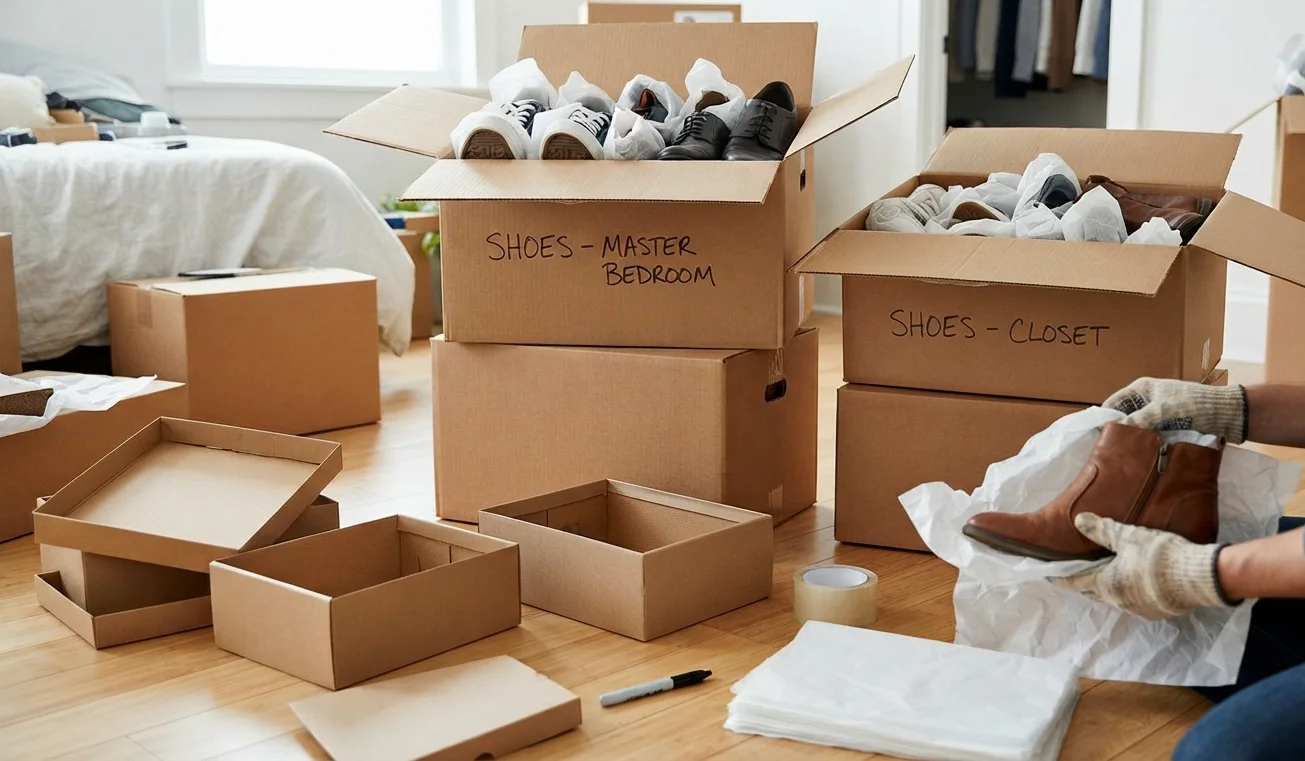
How to Pack Shoe Boxes for Moving: Pack Shoe Boxes Like PRO
One time I opened up a moving box at a new residence of the customer, and inside there were a bunch of loosely placed shoes that were crushed in between the heels, the boots, and the sneakers. In this case half of them got damaged by the contact so badly that they actually needed cleaning up before wearing.
The simplest solution of how to pack shoe boxes when moving would be: to clean and stuff each shoe, wrap a pair in packing paper, use the original shoe boxes or medium-sized moving boxes with paper, and place the heaviest shoes in the bottom, the rest on top.
It might seem easy to pack the shoes, but they can easily get crushed, scuffed, and their color will transfer if you put them loose. If you are on a tight budget and planning to pack the shoes by yourself, it will take only a few more minutes per each pair. This is how you do it.
Table Of Contents[hide]
Things you'll need
All of the listed materials can be purchased at any local hardware/home goods store and you may already have some of them in your possession.
- Medium moving boxes
- Original shoe boxes or clear plastic shoe bins
- Packing paper
- Tissue paper
- Bubble wrap
- Silica gel packets
- Painter’s tape
- Permanent markers
- Labels
- Work gloves
In my experience of moving house, medium-sized boxes are much better to use when packing shoes, as opposed to large ones. First, the latter become too heavy if filled with shoes and are more likely to fall and thus damage the things inside. Second, medium-sized boxes will be convenient to move since they are not going to be too heavy even when they are completely filled with shoes.
Things to Do Before Packing Shoe Boxes
First of all, it is necessary to make sure that one thinks over several important details before starting the unpacking process. This step is usually forgotten about, and this leads to the situation when shoes appear to be damaged by being dirty, creased or even moldy.
- Cleanliness: Shoes should be wiped from any traces of dirt, mud or dust. Make sure they are completely dry since they may become stained, moldy or smell musty after transportation.
- Inspection of the condition of shoe boxes: It is important to look through boxes where shoes were kept and replace them with good ones in case of need.
- Prepare adequate packaging materials: Prepare enough packing paper, tissue paper, bubble wraps, packing tapes, and labels before starting the packing procedure. Preparing your materials ensures a smooth packing process as well as giving extra protection for fragile and costly shoes.
- Protect the shape of shoes: Fill each shoe with packing paper, clean socks, and tissue papers to preserve its shape. It is very crucial especially for leather shoes, boots, and formal shoes since they are easily deformed.
Step-by-Step Guide to Packing Shoe Boxes
- Step 1: Sort and Purge Before You Pack
Categorize your shoes in groups such as keep, donate, and throw away. The process will enable you to minimize the number of boxes you will have to pack and move around.
The most common error people make at this stage is to pack all the shoes without checking their conditions, which include old and broken shoes. Sorting out first prevents you from having to move around boxes filled with shoes that you did not intend to wear in your new place.
- Step 2: Clean Each Pair Before Boxing
Use a microfiber cloth and leather conditioner to wipe your leather shoes, while the suede shoes should be brushed gently with a suede brush. The fabric sneakers can be wiped or brushed to remove dirt on the surface of the shoes.
This is important because dirty shoes that are packed together can cause color transfer, especially between the light and dark pairs. It will take a few minutes to clean them and prevent this mess when you unpack them.
- Step 3: Deodorize and Dry Shoes Fully
Make sure each pair is absolutely dry before packing and eliminate the smell from those that are not dry by using a light spray or keeping them out for a while. Packing your wet or sweaty shoes in a packed box is probably the quickest way to get mold growing on them once you unpack them.
Another mistake that homeowners have made is packing their shoes right out of a gym bag or after a rainstorm without drying them out first. In case you are not sure about whether a shoe is totally dry or not, it is better to let it rest overnight than risk the entire box.
- Step 4: Stuff the Toe Boxes
Pack tissue paper, packing paper, or a shoe tree in each shoe so as to fill out the toe box. This precaution is important mostly for shoes made of soft materials because an unfilled toe box is susceptible to being squished up and having creases put into it.
Boot shafts will require a boot shaper or rolled packing paper along the shaft to keep from getting bent out of shape. Not doing so is another quick solution which results in shoes arriving in a misshapen form even though the box looked fine from the outside.
- Step 5: Wrap Pairs Individually
Each individual shoe should be wrapped in a separate layer of wrapping paper or tissue paper, then held together with a small strip of painter’s tape. Unlike some types of tape, painter’s tape does not leave behind any sticky residue that could mark leather and fabrics.
The reason why wrapping the shoes individually helps prevent marks is because that is how no scuffing will happen. Wrapping the shoes may take more time, but it makes sure that the footwear stays as beautiful as possible after the move.
- Step 6: Box Shoes by Type and Weight
Boots, heavy sneakers, and other heavy footwear should go to the bottom of the box while flats and open-toed footwear should stay in the upper layers. It is also possible to stack several shoeboxes in one large box and pack them like that.
This method works in such a way because heavy footwear on top of light footwear can damage delicate parts of the bottom shoes, especially their toe boxes and soles. Make sure the box is balanced after packing it.
- Step 7: Add Moisture Protection
Include a couple of silica gel packets in each shoe box in case you are moving during a humid time of year or if you plan to leave the shoes packed for an extended period of time. This small item serves as a great aid against discoloration or the formation of mold inside the sealed shoe box.
Even though it may seem like a simple step that could be easily overlooked, it is quite important in terms of leather and suede shoes. As an alternative to silica packets, you can use cedar inserts that serve the same purpose and also minimize any odors.
- Step 8: Seal, Label, and Load
Seal the shoe box tightly using tape, and then label it with a permanent marker indicating its contents and the closet it originated from, such as “Shoes, Master Closet.” Pack shoe boxes near the middle or top of the packing stack in the truck, as shoe boxes are quite light items and should not be stacked above any other heavy furniture.
Do not pile all shoe boxes on one place to form a tower, as it is quite likely for the tower of light shoe boxes to become unstable and fall down during transportation.
Special Situations
Packing Delicate or Designer Shoes
Shoes that are made of delicate materials, adorned with decorations, or are of high value should not only be wrapped with the standard tissue paper but should also get additional protection. If you have the original dust bags, use them to store delicate shoes, and also think about wrapping the shoe in the bubble wrap and then putting into the box.
Do not put anything on top of a box with delicate shoes, even other shoe boxes, as the pressure might affect delicate materials in the long run.
Packing Shoes for a Long-Distance or Storage Move
When packing shoes for a long time, especially when packing shoes in a moving truck or storage unit, it is necessary to pay attention to moisture control. Inspect boxes occasionally if you can, and do not pack shoes immediately after washing them in a sealed box with any liquid cleaning agent, as the moisture left after cleaning will increase mold growth chances.
Packing Shoes With Limited Boxes or Supplies
As an alternative to the cardboard boxes, you may use clear plastic shoe boxes that will allow you to see the contents of the box without opening it. As for toe stuffing, you may use plastic bags or extra clothing, such as socks if you lack packing paper.
Common Mistakes to Avoid
- Putting unwrapped shoes into a packed box
- Bypassing the cleaning step when packing dirty shoes
- Using boxes to store wet or sweaty shoes
- Putting unstuffed toe boxes in danger of getting creases
- Storing heavy shoes on delicate ones
- Packing one box beyond its carrying capacity
- Not labelling the box contents for future reference
Based on all my experience in relocating hundreds of households through the years, these are the same mistakes that I always see people make. The funny thing is, most of them are actually free to avoid and just require some planning ahead of the big moving day.
When Professional Movers Can Help?
Packing shoe boxes by yourself is one of those tasks that is relatively easy to do. However, sometimes it pays to consider outside help in light of other circumstances.
This could be due to the fact that you have to deal with a complete household relocation in a limited amount of time, have a lot of precious and delicate pairs of shoes in your collection, or simply plan to move over a long distance.
Companies like Power Movers provide moving help, which can help homeowners avoid property damage, physical strain from carrying too many boxes at once, and the unnecessary expense of replacing shoes damaged during a rushed pack.
The presence of an extensive shoe collection and the lack of sufficient time before the upcoming relocation process make a good occasion for asking professional assistance.
Conclusion
As you see, packing shoe boxes requires nothing more complicated than sorting and cleaning up, stuffing each pair separately and wrapping it up, putting items in layers and applying moisture protection. Follow our guidelines and your shoes will reach your destination spot safe and sound.
No matter whether you will pack all shoe boxes on your own or hire a professional team, your aim is to make the relocation process as easy and comfortable as possible. Are you ready to get started?

Article written by
Gary founded Power Movers in 2007 after watching too many moving companies damage or steal from customers with no consequences. The company runs on one rule: every crew member gets background-checked, trained, and held to the same standard Gary was held to as a police officer. Over 9 years in, Power Movers handles local and long-distance moves, specialty items, and corporate relocations for Houston businesses including Tesla and Airgas.